What Makes Meeting Minutes Effective
Published on 25 June 2026
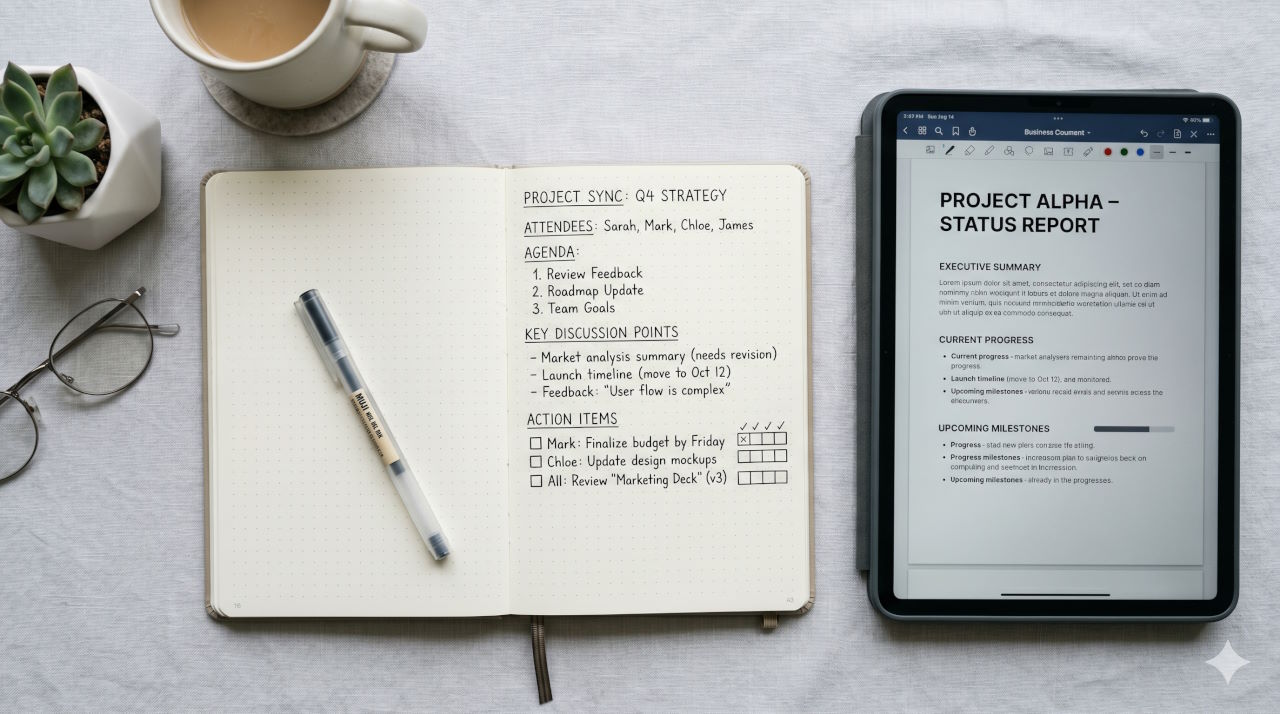
Minutes Are Not a Transcript
The first mistake organizations make with meeting minutes is confusing them with a transcript. A transcript records everything that was said. Minutes record what was decided, what was agreed, and who is responsible for what next.
Good minutes are brief, factual, and structured. They answer three questions: What was discussed? What was decided? What happens next?
The Anatomy of Effective Minutes
Header: Meeting name, date, time, location or format, chair, and attendees present. For formal bodies, also note who sent apologies.
Agenda items: For each item: a brief summary of the discussion (two to four sentences), the decision made (if any), and action items with owners and deadlines.
Decisions section: For governance-heavy organizations, a dedicated section listing all decisions made — one sentence per decision, clearly worded so there is no ambiguity.
Action items: A table or list: what needs to be done, who is doing it, and by when.
Next meeting: Date, time, and any standing agenda items for the next session.
What Good Minutes Look Like in Practice
Item 3: Budget approval for Q3 marketing spend
The committee reviewed the proposed budget of €45,000. After discussion of the digital allocation, the committee approved the budget as presented, subject to a mid-quarter review to assess campaign performance. Action: Finance team to establish monthly reporting dashboard by 15 July. Owner: A. Ferreira.
Notice what is not in the example: the full back-and-forth of the debate, who said what during the discussion, or the exact wording of every comment. That belongs in the audio record, not the minutes.
Timeliness Matters
Minutes issued within 24 hours of a meeting are useful. Minutes issued five days later are significantly less so — people have moved on, the context has shifted, and any errors in the record are harder to correct.
The traditional bottleneck is the time it takes someone to write up and circulate the minutes. TymitHub removes that bottleneck: the AI generates a draft from the meeting transcript the moment the session ends. The chair reviews, amends if needed, and approves. The first draft is ready before anyone has left the building.
The Audit Trail
For formal organizations — municipal councils, boards of directors, joint committees — minutes are a legal document. They form part of the official record and may be subject to freedom-of-information requests, audit reviews, or legal challenges.
Every line of TymitHub's generated minutes links back to the exact timestamp in the audio where it was said. When a council member disputes a recorded decision, you don't argue about what was agreed — you open the minutes, click the timestamp, and hear the moment. That is accountability built into the record.
Minutes as Institutional Memory
Organizations that maintain consistent, high-quality meeting records make better decisions over time. When a new board member joins, they can read the minutes of the last twelve months and understand the context, the debates, and the reasoning behind current policies. When a project stalls, the team can trace back through the record to find where the original decision was made and why.
See how TymitHub generates minutes from your meetings automatically.